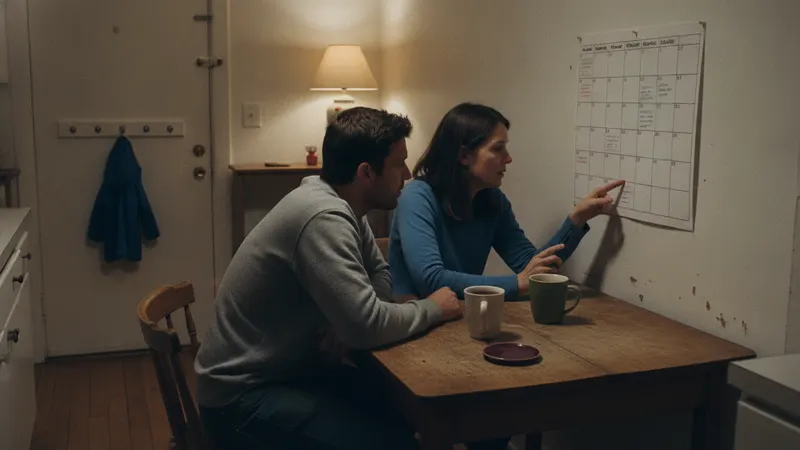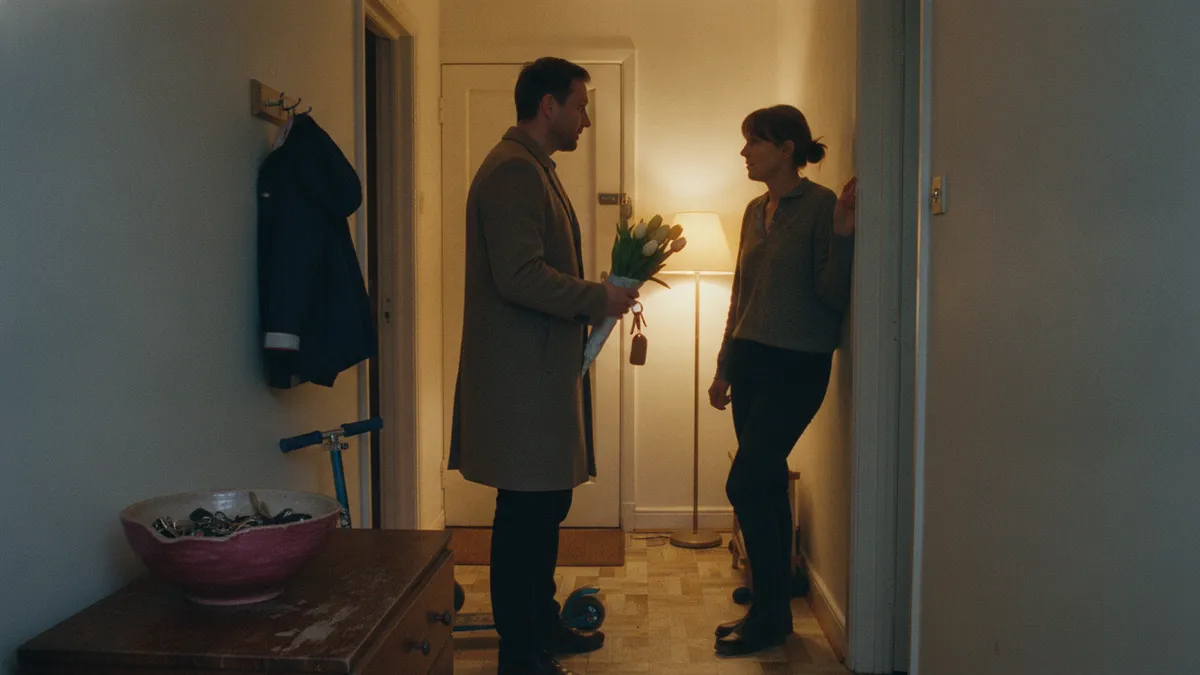
Dating single mom is how the question usually arrives in a search box, and underneath the missing grammar it asks one thing: what changes when the person you are seeing is raising a child. This section answers that at the level of the arrangement — the calendar, the pace, the money, the third person who did not choose you — and hands every specific to the pages below.
What follows is the shape of the section rather than its contents: what changes, what does not, what these pages deliberately refuse to cover, and which page owns which question.
What does dating a single mom actually change?
Four things change, and all four are logistical rather than emotional. Her free evenings are produced by an arrangement that existed before you did. Plans move at short notice for reasons that are not about you. Money enters practical conversations earlier, because an evening out has a childcare cost attached to it. And meeting the child is a separate stage on its own schedule.
A custody schedule is the standing arrangement that decides which nights a child spends where, and it is the most useful thing to understand early. Almost every friction people describe in this kind of relationship is a downstream effect of it. Consider a couple whose only reliably free evening is a Tuesday: nothing about that is a verdict on the relationship, but read as one it produces an argument a month.
The trade-offs those four changes produce, in both directions, are set out on the pros and cons page — the page to read if the real question is whether this is a good idea. How they look at different stages of a child’s life is on the page on age, whose whole argument is that the age doing the work is the child’s rather than hers.
What stays the same?
Most of it. Attraction, conversation, whether you enjoy the same evenings, whether someone is kind when tired — none of that is altered by a child being in the picture. The folklore treats a mother as a category. The ordinary experience is of dating one person who has an inflexible calendar.
Green flags are the plain signs that a relationship is working: plans that hold, questions that get straight answers, an ex treated as administration rather than as a subject. They matter more than the warning lists, and they sit beside the warnings — both directions, the same length — on the red flags page.
One default assumption is worth correcting early, because it changes how people behave. The U.S. Census Bureau reported that among mothers maintaining one-parent family groups in 2022, 51% had never married and 29% were divorced. That is marital history and nothing else. It tells you the story you arrived with may be the wrong one, and it tells you nothing about the woman you are seeing.
Is dating a single mom harder than dating anyone else?
Harder in the diary, not in the relationship. The constraints are visible from outside, which is why the subject attracts so much commentary from people who are not in it. Some of that commentary is an honest reservation rather than prejudice: Pew Research Center found that in 2019, 36% of single U.S. adults who were looking for a relationship said they probably or definitely would not consider a relationship with someone who is raising children from another relationship.
That figure describes a reservation among daters in general. It is not a verdict on anyone, and the survey does not say who those people were or why. Pages here that take on “is it worth it” answer it as a question about conditions, because the other version has no answer a website can give.

What does this section deliberately not cover?
Anything that needs a lawyer, an accountant or a clinician. Child support, custody orders, benefits and tax are outside the scope of every page here, without exception. So is her past relationship — how it ended is not our subject, and auditing it is not a task anyone has given you.
It also does not print folklore with a number attached: no share of men who will or will not date a mother, no correct waiting period, no month at which a child should meet a partner. Sourced figures appear on the statistics page with the wording each one allows. Where no figure exists, these pages say so instead of estimating.
Which page answers which question?
Each page below owns one question, and none of them repeats another.
- Whether to do it at all. The trade-offs in both directions, on pros and cons of dating a single mom.
- What to watch for. Two lists of the same length, hers and yours, on red flags and green flags.
- What to actually do. Planning, pace, money and the conversations that go better early than late, on the advice page.
Three further pages take the situations that change the answer. If you have no children of your own, the adjustment is to spontaneity and to a role with no name for a long stretch. Dating as a childless man separates the adjustments that are real from the ones people brace for and never meet. If you are a parent too, the problem is arithmetic rather than attitude: two schedules that rarely line up, which is the subject of the page for a single dad.
The last page is the smallest and the most misused. Messaging goes wrong on timing far more often than on wording, and what to say over text is about that distinction, not about lines that supposedly work. Well-meant openers fail for structural reasons — such as arriving at bathtime, or asking about the child before you have met her twice.
Two neighbouring sections carry what this one is not. The same subject from her side — for example the profile, the timing and the introduction — is in dating as a single mom, and which platforms filter for parents is in the app reviews. Neither is needed to read this one.