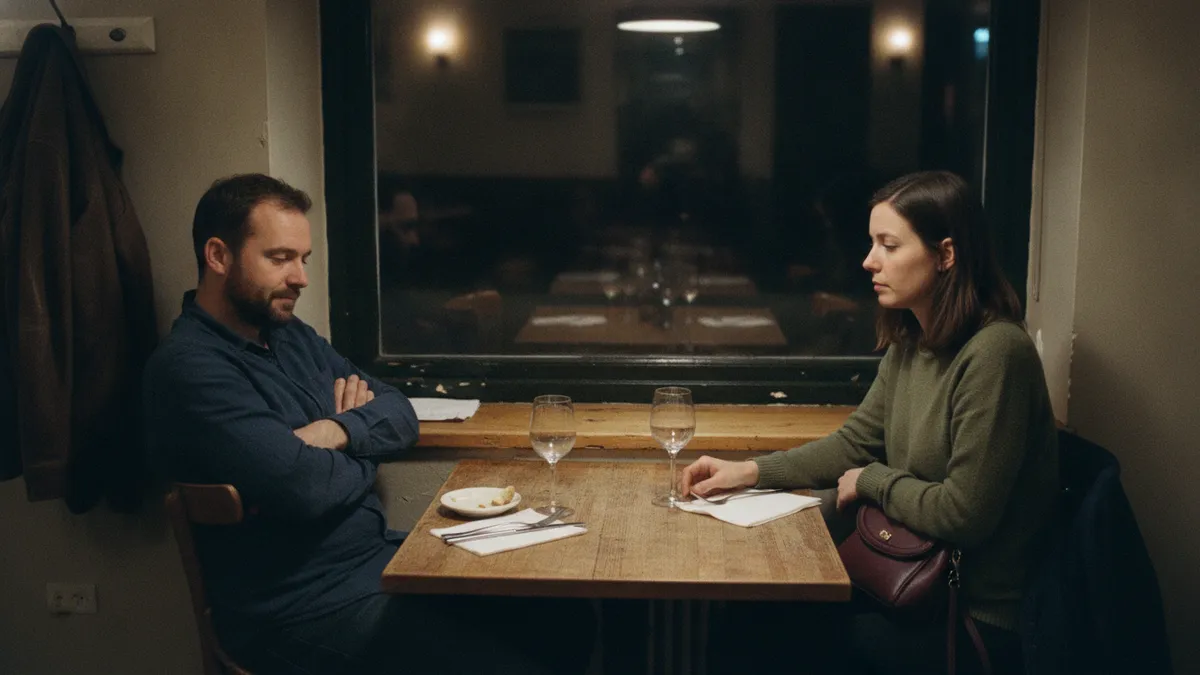
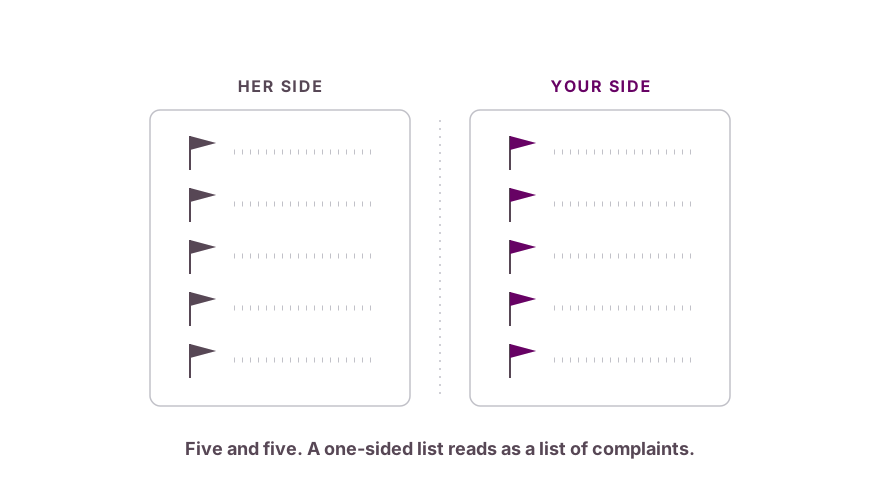
Dating a single mom red flags are behaviours that repeat, not facts about a person’s circumstances. The standard list online runs one way: things he should watch for in her. That list is half a page. She is reading the same page, and she has her own list, built from people who wasted her evenings. So this one runs both directions, and the two sections are the same length on purpose.
Two ground rules for reading it. A flag is a pattern, not a bad Tuesday — one cancelled dinner is a cancelled dinner. And nothing below is a verdict about a person. Behaviour that repeats is information; a life circumstance is not.
What are the red flags on her side?
Five, and each one is a behaviour that repeats rather than a single bad evening.
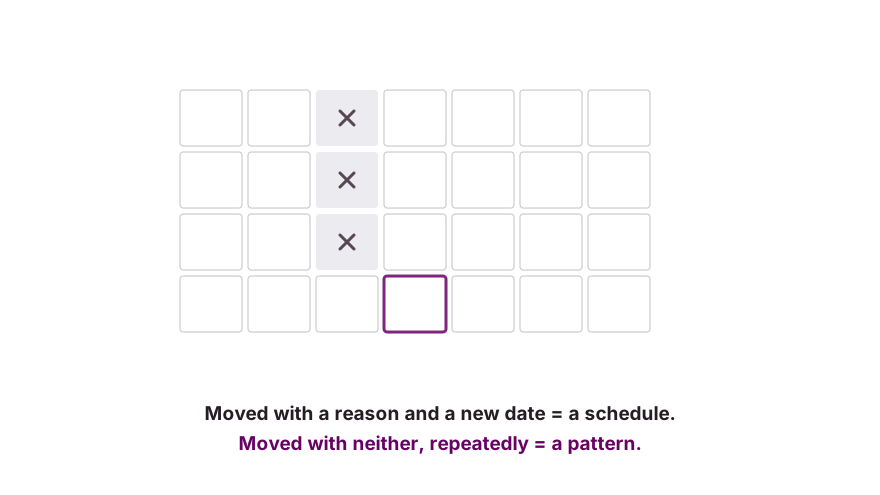
- Plans break with no information and no reschedule. A child gets sick, and plans collapse; that is the job. What is different is the version with no reason offered and no new date proposed. The first is a schedule you do not control. The second is a person keeping you available without deciding anything.
- Money arrives before anything else does. Not “we split this differently because our situations differ” — that conversation belongs early and is covered in our advice page. The flag is money as the first structural question, before she knows much else about you.
- You are being assessed as a role, not met as a person. Everything routes back to whether you are “good with kids” in the first fortnight. It can mean the search is for a replacement adult in a household, and that search does not stop when you turn out not to want the position.
- She pushes to introduce you to her child early. Counterintuitive, because it looks like enthusiasm. An introduction that arrives before the relationship is stable puts the child in the path of whatever happens next. Read it as the flag it is, not as flattery.
- Talk about you is already talk about a future household. Moving in, “you’d be so good for him”, plans for next year — in week three. Speed like that is about the shape of a household more than about you, and it can reverse as fast as it arrived.
What are the red flags on your side?
Five as well, and this is the list she is running while you run yours. It is the one this page exists to write down. Custody time refers to the nights a child is with each parent, fixed in advance and not adjustable by the two of you, and most of the items below come back to it.
- You treat her time as elastic. For example, suggesting at six that you meet at eight, or sending a late “you up?” message. It reads as: my evening is worth planning, yours is available. On a schedule set by custody, a plan made three days out is worth more than three enthusiastic messages.
- You want to meet the child, and you want it soon. Easy to frame as commitment. It is the same flag as number four above, from the other chair, and it puts a decision that should be slow and entirely hers on your timetable.
- You keep score. Two cancellations become a tally, then a comment, then leverage. Keeping score of things she did not choose is how a schedule turns into an argument about respect.
- You explain her own life to her. Opinions about things such as bedtime, screen time or the handover. Nobody with a child needs a fortnight-old view on how to run it, and it lands as audit rather than interest.
- You perform a role you do not want. Playing at parent to be liked, then pulling back when it is real. Withdrawal is allowed at any point; performing first and withdrawing later is what does damage, and the damage is not only hers.
That symmetry is the whole point of the trade-offs page too: the risk in this relationship is not carried by one side.
Which green flags do most people miss?
The quiet ones, in both directions. A green flag is an unremarkable behaviour that suggests the relationship will hold: nothing romantic about it, which is exactly why it gets overlooked.
On her side
- She tells you the actual reason a plan moved, and proposes a new date in the same message.
- She keeps the early months entirely separate from her child, and says so plainly rather than being vague about it.
- She asks what you want out of this before assuming you want a household.
- She treats your time as finite too — she is not surprised that you also have a week.
On your side
- You plan further out than you would otherwise, without making a favour of it.
- You ask about the schedule, not about the ex, and you remember the answer.
- You are comfortable being a person she is dating rather than a role, for as long as that takes.
- You say plainly when something is not working for you, instead of collecting it silently.
One more on each side, harder to see. Hers: she can say no to a plan without apologising for her life. Yours: you can hear a no about her child and not treat it as a verdict on you. Both are the same skill — separating the schedule from the feeling.
What is the brutally honest version?
Enthusiasm is cheap here and planning is expensive, so planning is what registers. People search for brutally honest rules for dating a single mom, and this is the short form of everything above, with the flattery removed.
Her time is allocated before you arrive; you are competing with a schedule, not with other people. The child is not a topic you are being tested on, and being eager about the child is not a qualification. You will be cancelled on, and how you take it is more visible than how you take her.
And in the other direction, equally blunt. Being a parent buys nobody a pass on ordinary behaviour: a reason with a cancellation, a straight answer about what this is, a decision made rather than deferred. “I have a child” explains a moved evening. It does not explain three months of ambiguity.
The two paragraphs are the same rule stated twice. Neither side gets to convert their circumstances into a licence, and both sides can name what they need without apologising for it.
What looks like a red flag and isn’t?
Four things, and the most common is a cancelled plan. A misreading is a scheduling constraint read as a message about how she feels.
Cancelled plans. Imagine an evening that moves twice in a fortnight, each time with a reason and a new date attached: that is a schedule doing its work, not a pattern. The relevant question is never whether plans move; it is whether a reason comes with them and whether a new date follows.
A slow pace. Weeks between the second and third date is not disinterest. Somebody has to be covered at home before an evening exists at all. Pace here is logistics wearing the costume of emotional distance.
No replies after nine at night. Bedtime, homework, an hour of quiet that is the only hour of the day. What you send and when matters more here than volume.
She never mentions a divorce. The default assumption is that a single mother is a divorced woman, and it is often wrong. Among mothers maintaining one-parent family groups in 2022, the U.S. Census Bureau recorded that 51% had never married and 29% were divorced. That is marital history and nothing more — it tells you which questions not to assume, not what happened.
Is being a single mom itself a red flag?
No: being a parent is a circumstance, and red flags are behaviours. The last misreading is the category itself. The Pew Research Center, in a survey fielded in October 2019, found that 36% of single adults looking for a relationship said they probably or definitely would not consider a relationship with someone raising children from another relationship. Pew published the report in 2020. That is a measured reservation among daters, not a finding about mothers, not split by gender, and the survey does not record a reason. It says something about how the category is treated, and nothing about the person in front of you. The rest of the numbers we use, with their sources and their limits, are on our statistics page.
If the two lists above cancel out for you, the rest of this side of the site starts at the dating a single mom hub. If they do not, that is a legitimate answer too, and it is better arrived at in month one than in month eight.