
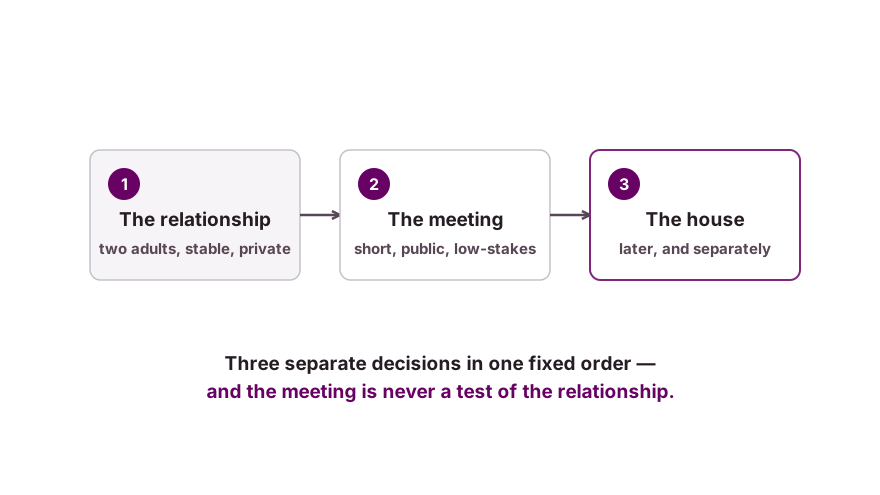
Two questions sit inside single parent dating and sleepovers, and they are easily collapsed into one. The first is when a child meets the person you are seeing. The second is whether that person sleeps in the house your child wakes up in. They have different answers, and the second one comes much later.
Single parent dating and sleepovers are two separate decisions rather than two stages of one, and the second arrives long after the first. This page gives an order, not a schedule. We have no waiting period for you, because no survey we would stand behind publishes one. What circulates instead traces back to dating apps promoting their own product, which is the last party we would take a timeline from.
Is the introduction a test of the relationship?
No — an introduction is what you do once you already know the answer, not the way you find it out. One reason an introduction happens too early is that it is being used to find something out. Whether he sticks around. Whether she is serious. Whether this is going anywhere.
That is exactly backwards, and it is your child who pays the cost if the answer turns out to be no. Every person a child meets and then loses teaches them something about how adults arrive and leave.
Order it like this: the relationship becomes stable, then the introduction, then, separately and later, any question of overnight stays. Our page on when to start dating again makes the same point from the other end. Nothing about that order is anxious. It is just the sequence that keeps a child out of a decision they did not make.
What should you know about the person first?
You should know how they behave in ordinary conditions, where they live, who else is in their life, and whether their account of themselves holds up. This is a check, not distrust. You are the only person in a position to run it, so run it.
Ordinary conditions are the unremarkable and inconvenient parts of a life — a cancelled plan, an illness, a bad week, being told no — rather than the parts a person arranges for you to see.
- You have seen them across ordinary conditions, not just good ones: a cancelled plan, an illness, a bad week at work, being told no.
- You know where they live and have been there.
- You have met people from their life, not only heard about them.
- Their account of themselves has stayed consistent, and the parts you could check, checked out.
- They have never pushed to meet your child, and have not asked for details about them.
That last one is the one to weigh heaviest. Imagine someone who wants your child’s photo, your child’s school, your child’s schedule, or a video call “just to say hi” before you have met a single person from their life. That request is itself the answer. The same rule holds on your public profile: what stays off it is covered in writing a profile as a parent, and the short version is that a child’s face, name, school and routine never go online.
What should the first meeting look like?
The first meeting should be short, public, in daylight, and easy to end. Everything about it should make leaving simple.
A low-stakes meeting is one that can end early without anything being spoiled, which is why the setting does most of the work. Pick a public place with an activity in it and a natural finish, such as a park, a playground, or the hour before a film that only you and your child then go to. Not your home. Not a long meal where a child is trapped at a table with a stranger being interviewed by their mother.
Say less than you want to. A first name and a plain description is enough. No title, no “someone special”, nothing for your child to hold up against whatever happens next. A label, once given, gets used, and taking it back later is the part that hurts.
Let the person leave first, and let your child’s plan continue without them. Skip the gift. Presents at a first meeting buy an evening and cost you the child’s read on the person, which is information you actually want. Do not debrief on the drive home; if your child has something to say, they will say it when they are ready, and it may come while they are doing something else.
Two dates to avoid: birthdays and any first day of anything. A child should not have to share an occasion with the introduction, and an occasion should not be doing the emotional work for it.
Why are sleepovers a separate decision?
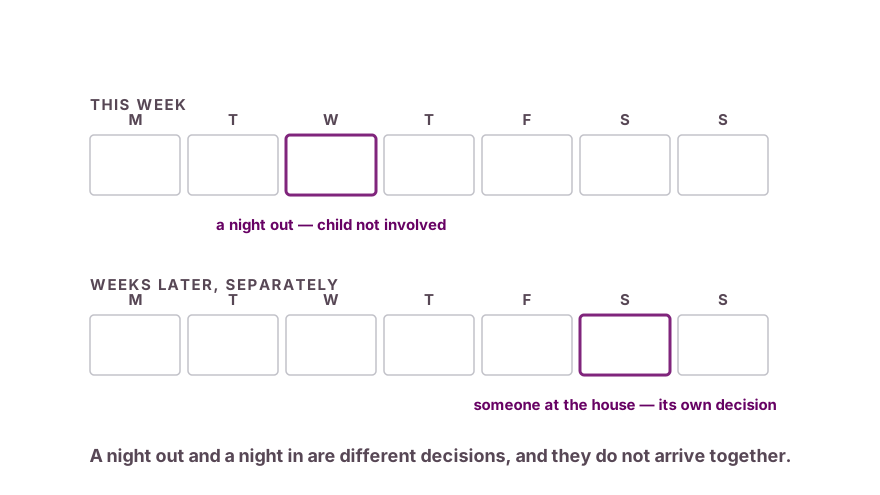
They are separate because an overnight stay is a decision about your child’s home, not the next rung after a successful afternoon in the park. Your home is where your child does not have to manage anyone. A person who sleeps there stops being a visitor and becomes part of the household, and your child did not agree to that.
A sleepover refers to a night when the person sleeps in the home your child wakes up in, which is not the same thing as a night out while your child is elsewhere. Keep the two versions apart. Nights when your child is not at home are a decision about you. Nights when your child is asleep down the hall are a decision about your child, and it comes only once ordinary, unremarkable contact between them and the person has become routine.
The question people search for is about the child’s age. It is the wrong variable. Age changes what a child notices and how they talk about it, not whether the introduction was earned. An older child will have opinions about the whole thing and may say them at volume; a younger one may simply absorb a new adult in the kitchen as normal, which is a reason for more caution, not less. No source we could verify sets an age, so we do not print one.
A few practical things that hold at any age. An adult who is new to the household does not handle bedtime, bathing or discipline. Your child should never be left alone in that person’s care early on, however convenient it would be. And if overnight stays are quietly becoming someone living with you, name it and decide it out loud rather than letting the toothbrush count as the conversation.
If your custody agreement contains terms about partners staying overnight, that is a legal question and not one we answer. Ask a family lawyer who has read your actual order.
What if your child reacts badly?
Assume some version of this will happen, and assume it will not mean much on its own. A child can dislike someone for a voice, a car, or the simple fact that the adult in question is not their other parent.
Do not ask your child to like them, and do not stage a second meeting to fix the first. Reduce frequency instead. Keep the contact short and boring, and let familiarity do the work that persuasion cannot.
Consider the difference between mood and information, and listen for it. “He’s weird” on its own tells you little. “He talks over you”, “she goes quiet when you leave the room”, “he asked me not to tell you” is information, and the last of those ends the contact that day.
Also resist the opposite trap: your child is not the deciding vote on your relationship. Handing a child that authority is a weight, not a kindness, and it puts them in charge of your evenings. If the guilt around all of this is the loudest part, that is its own subject and we treat it separately in dating, guilt, and running on empty.
If you are the one being introduced
Read this side too, because it is the same page from the other chair.
- The pace is not yours to set, and asking for a date to meet the child is asking to be moved up the queue.
- Do not buy affection. Gifts and a big personality land as pressure on a child who is still deciding whether you are safe.
- Do not ask for photos, the school name, or the weekly schedule. There is no version of that request that reads well.
- Do not discipline, do not correct, do not comment on the parenting. You are a visitor for a long time.
- Being introduced is not a promotion and does not entitle you to stay the night.
The flags run in both directions, and these are the ones on her side:
- She pushes you towards her child early, before you have spent much ordinary time together.
- She asks you to babysit before you and the child know each other.
- She introduces you as a future stepfather almost immediately.
Each of those is the same problem in reverse: a child being used to secure a relationship. Slow it down from your side.
What we don't do on this page
This is the strictest page on the site, so the omissions are deliberate.
- Name a waiting period
- No survey we could verify publishes one. The figures that circulate come from dating-app press releases, and a number from a company that profits from you dating faster is not evidence.
- Set an age for the child
- Nothing in the clinical or government sources we read supports an age norm for meeting a partner or for overnight stays. An invented one would function as permission.
- Give you techniques for the child
- Scripts, reward charts and staged conversations are a professional's territory, not an article's.
- Touch custody or child support
- If your order or agreement is involved, that is a lawyer's question. We route you out rather than guess.
What we do stand behind
- The order
- Stable relationship, then introduction, then, separately and later, overnight stays. Never the reverse to test anything.
- Nothing about the child goes online
- No photo, no name, no school, no routine, no location metadata. Not a preference, a rule.
- The check on the person
- Ordinary conditions, their home, people from their life, consistency, and no pressure about your child.
Where this stops being an article’s job
If your child tells you they were touched, asked to keep a secret from you, or frightened by someone, stop reading advice pages and contact your local child protection service or the police. If a child is struggling in a way that lasts, a paediatrician or a child therapist is the right call. If custody terms are in play, a family lawyer.
We write about what changes in a relationship when a child is in it. We are not a legal or clinical service, and the sources behind everything numeric on this site are listed on our statistics page. This page carries no statistic at all, and that is the finding: there is nothing measured to report about timing.
For the rest of the practical side, including how people actually make the time, start at dating as a single mom.